

PROJECT: PALMA DE MALLORCA ARTS DISTRICT
Architects: Coll-Leclerc with Barceló-Balanzó
Location: Palma de Mallorca
Date: Competition: December 2025. Project: 2026
Program: Higher Conservatory of Music, Higher School of Dramatic Art, and Higher School of Design
Promotor: IBISEC
Consultants: Sergi Carulla, Scob (landscape), Miquel Rodriguez, Static (structure), Guillermo Montoya, Reolit Ing. (MEP), Cesc de Haro, Arrevolt (budget), Jordi Oliver, (WS Acustic)
Collaborators: Julia Sabater, Enric Pulido, Nicolas Coll, Ivan Ivanov, Blai Pijoan, Aitor Martinez
Construction Company: –
Area (m2): 22,315 m2 built area
Budget: €53,971,586 PEM (VAT not incl.)
AWARDS: First prize in competition
PUBLICATIONS
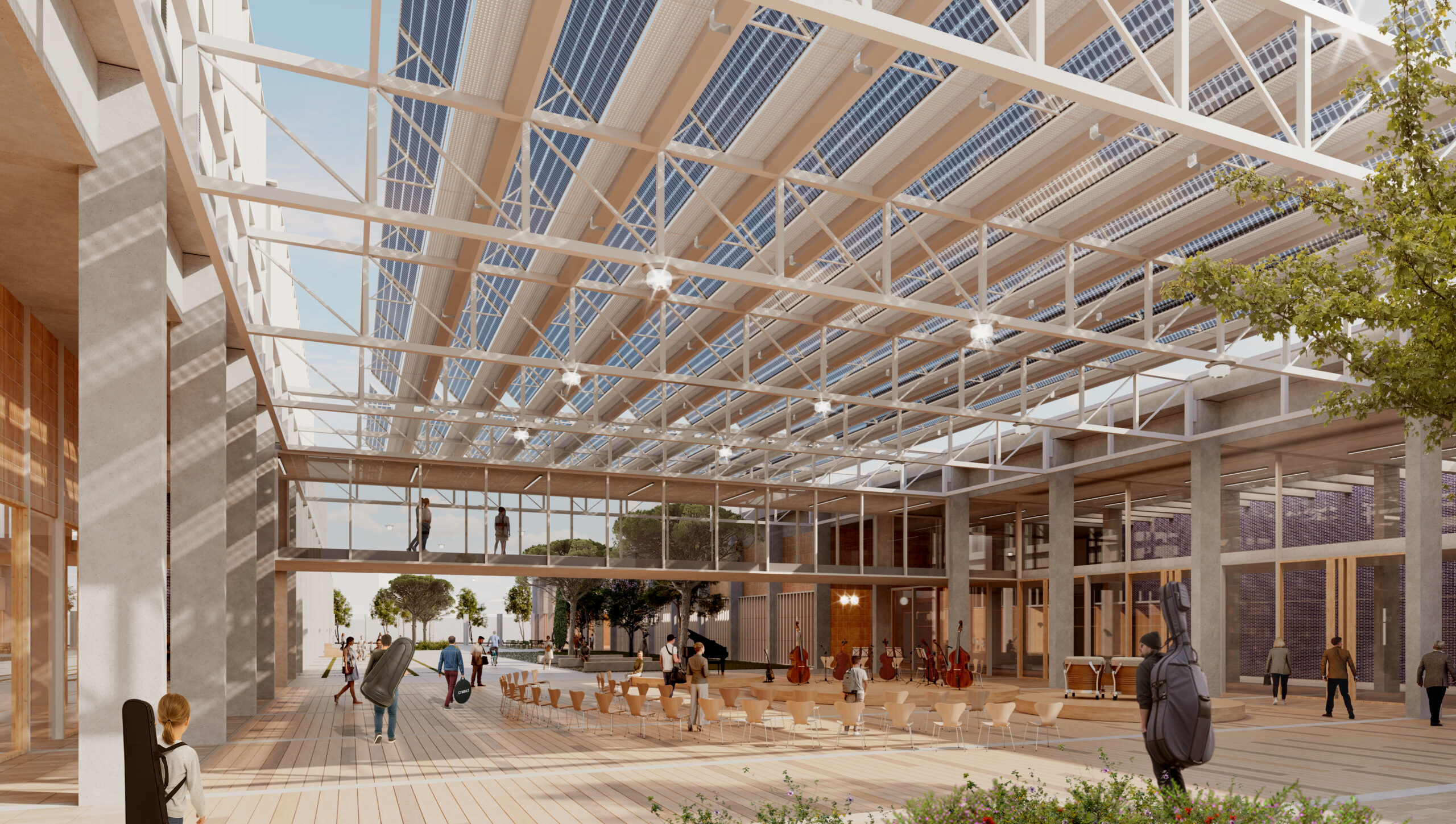
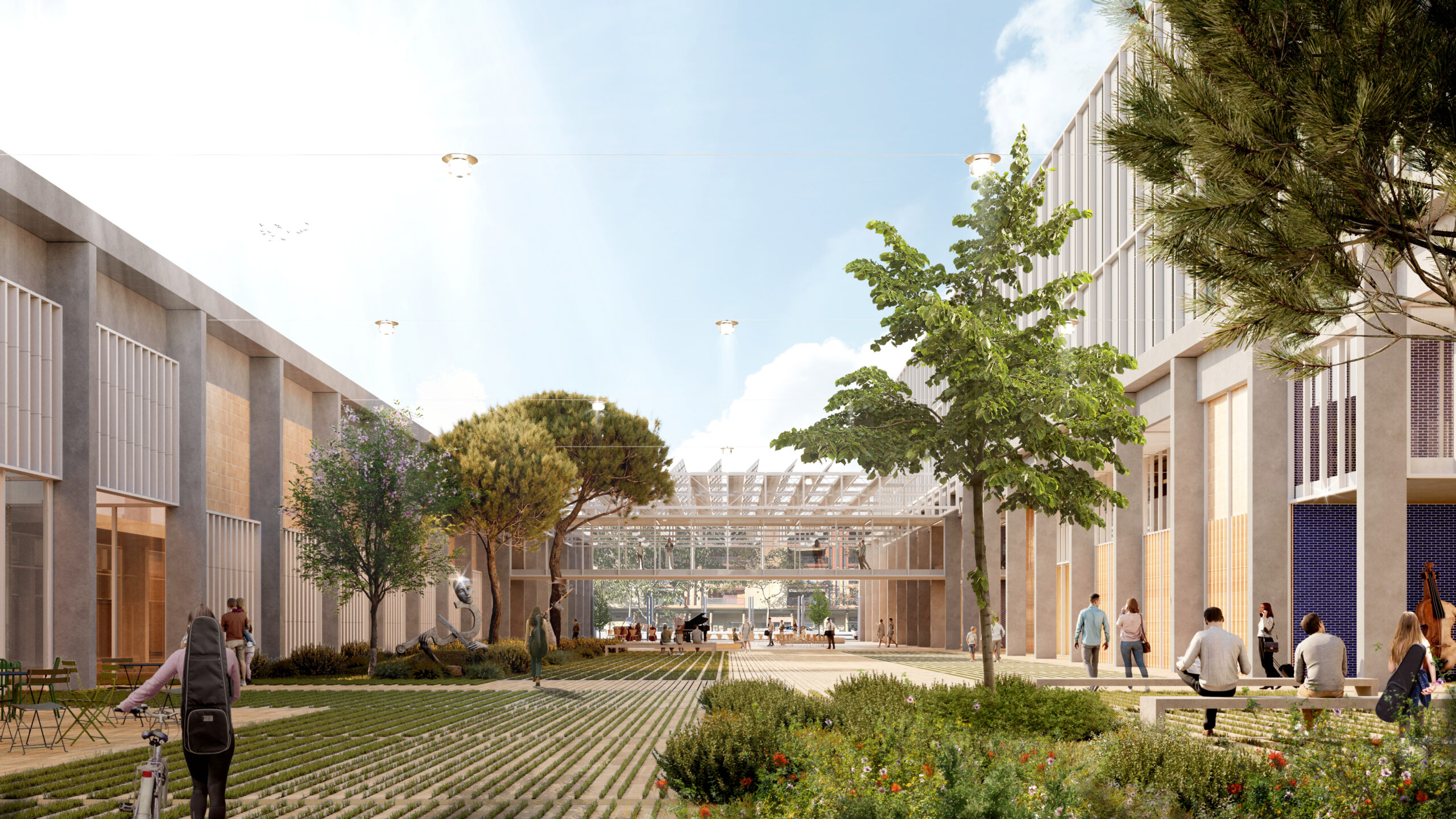
In 1915, Santiago Rusiñol described the “Passeig des Born” in the third chapter of “L’illa de la calma” (The Island of Calm). He called it a “promenade and a square with trees,” roughly the same size, 28 meters, as the central space of our proposal: a music passage, a place for rest, but also for meeting, a cultural agora where musical and artistic events will take place. A promenade that connects Camp Redò with Amanecer neighbourhoods.
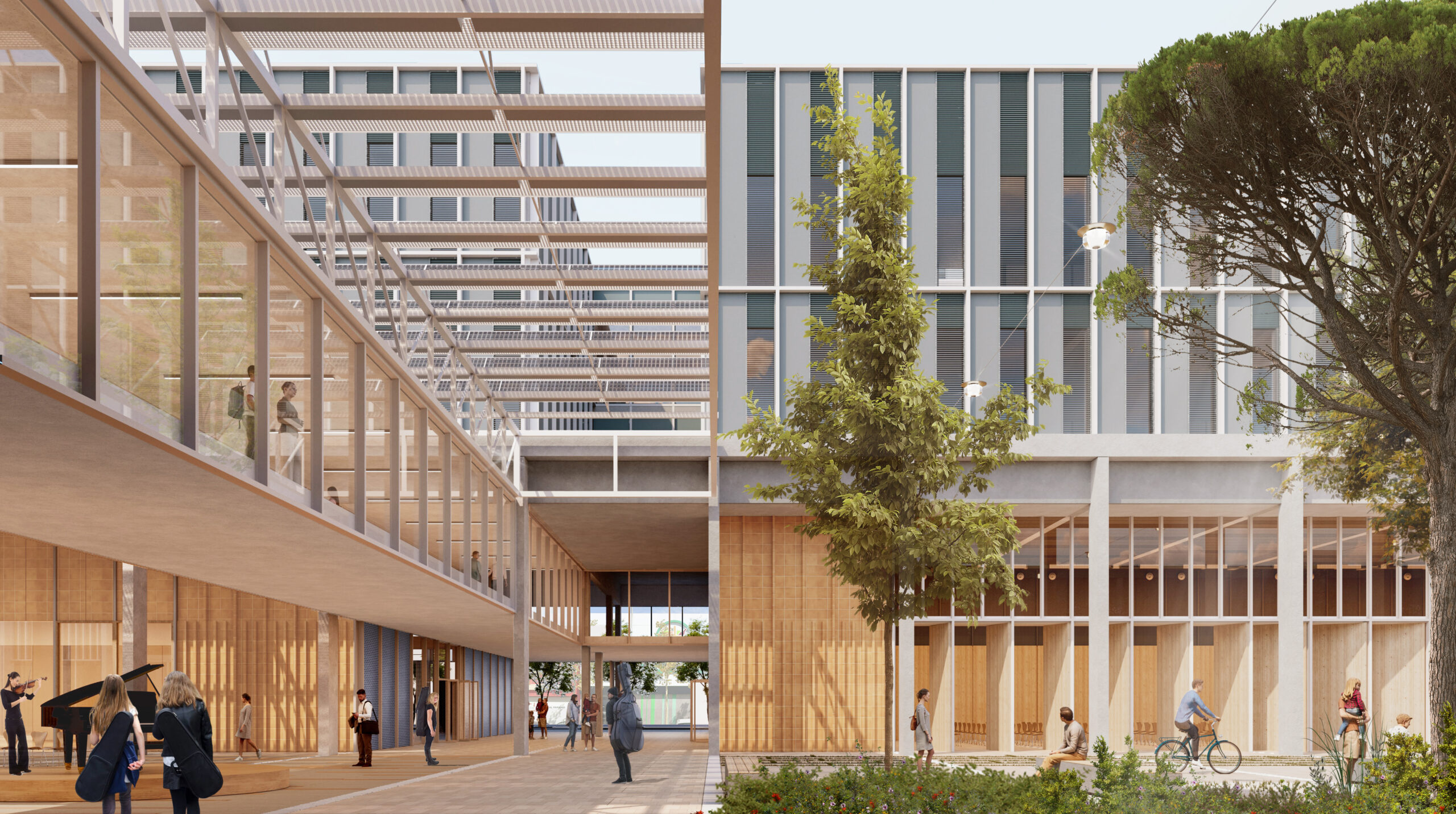
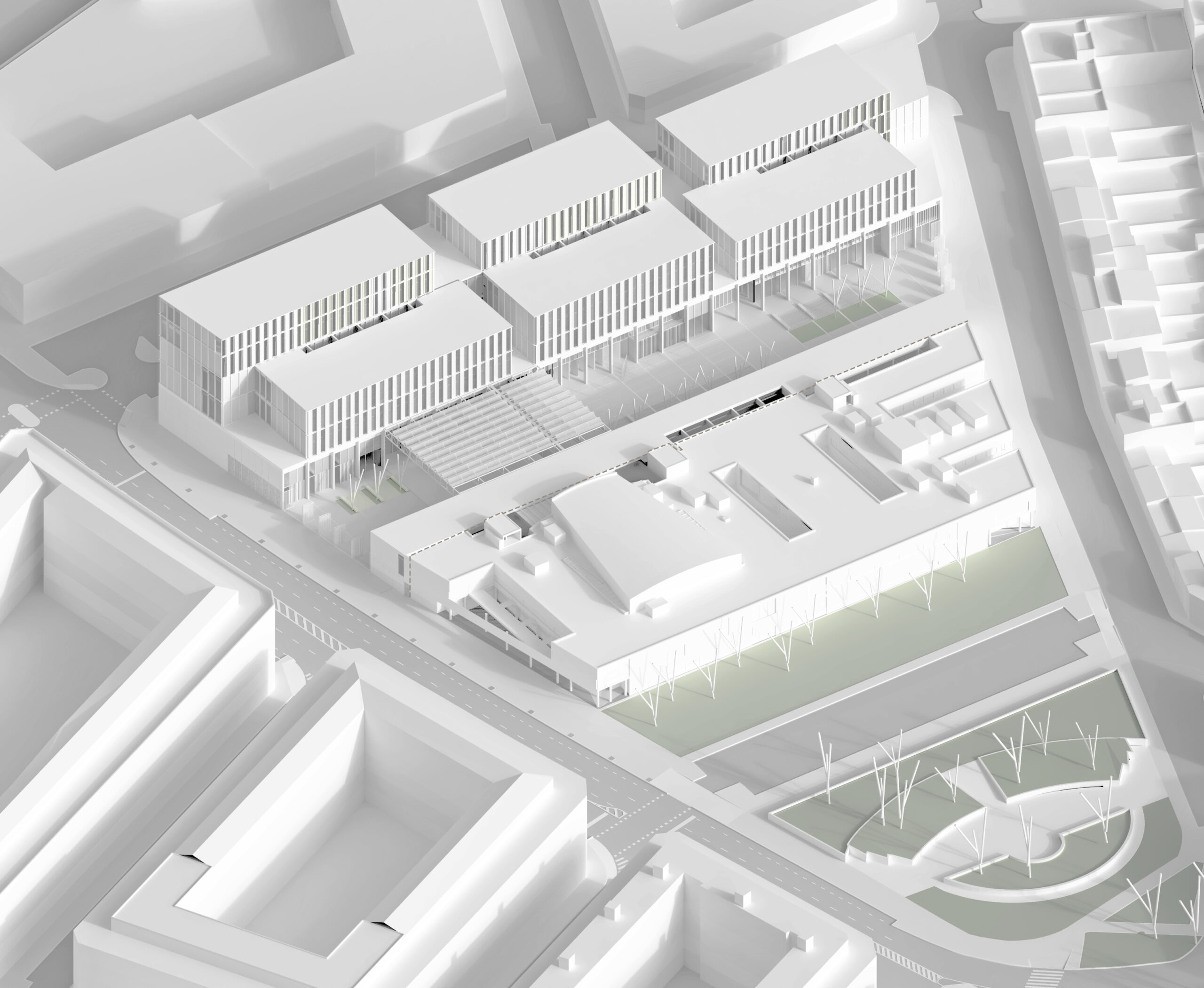
The project concentrates the entire program on the north side, creating a new urban façade where it is most needed, on Pere Caffaro Street. This façade steps down from west to east, creating a transition in height from the corner of Alfons el Magnànim, descending towards San Francisco de Sales. The program for the Higher Conservatory of Music, Dramatic Arts, and School of Design is organized into three distinct volumes that rise above a common 9-meter-high plinth, providing continuity with the existing conservatory building.
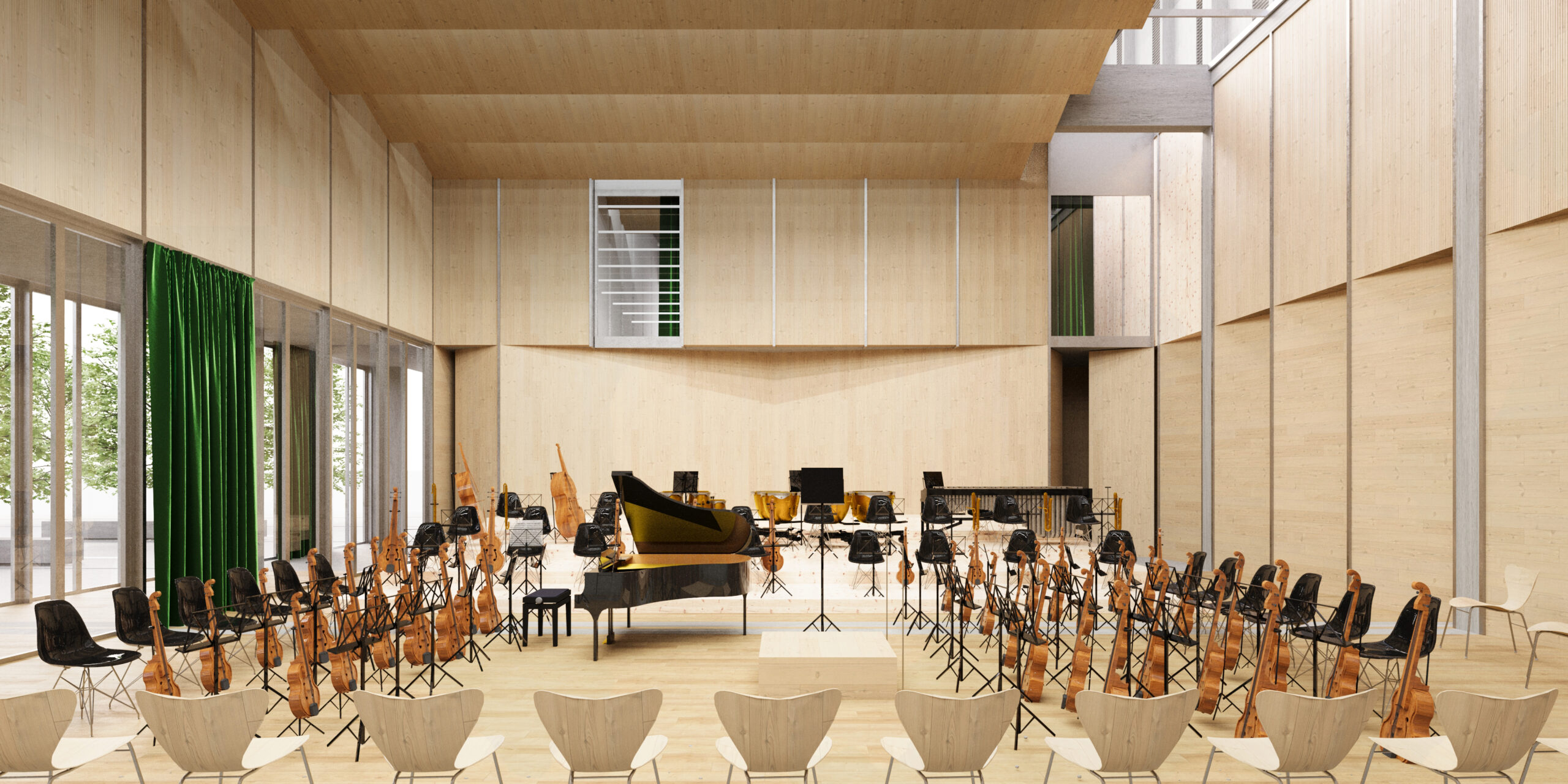
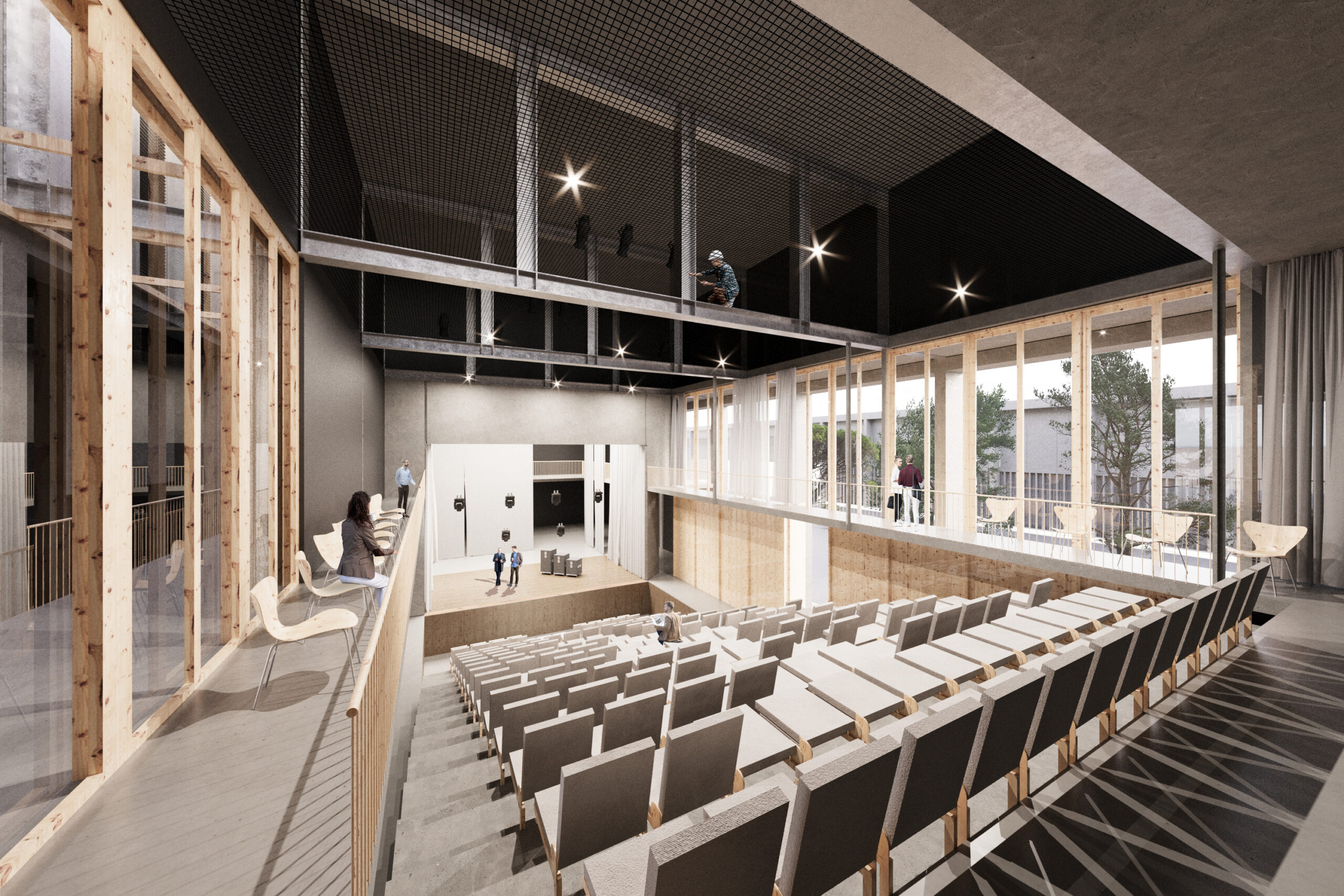
But we also break up the volume of each program into two buildings 16.5 meters deep, creating a second staggered structure from north to south. This ensures views and sunlight for the terraces and common areas, softening the impact the buildings could have on the central access promenade. This promenade is ultimately flanked by two new urban facades (9 meters high to the south), where both the common program (library, cafeteria, and administration) and the large rehearsal rooms (orchestra hall, theater, and conference rooms) open up. By opening onto the promenade, these spaces guarantee the quality of the space required in the tender specifications: “an agora as a space for meeting and collaborative work…a great stage with different artistic activities for Palma.”